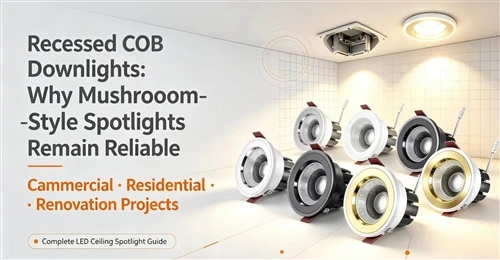
Spotlight Principle: To understand how spotlights produce light, we first need to understand their structure and working principle. As the name suggests, a spotlight focuses light and typically consists of three parts: a bulb, a reflector, and a lens. The bulb is the light source; the light is focused by the reflector and then emitted through the lens, thus achieving focused light and illumination.
Installation Location Affects the Light: But why do spotlights mounted on the ceiling create light? This is related to the installation location. The ceiling itself is a reflective surface, acting like a large reflector. Furthermore, the material and color of the ceiling affect the reflection and refraction of light, thus affecting the lighting effect of the spotlight. When the light from the spotlight is reflected at a certain angle from the ceiling and then passes through the lens, it creates scattered light, producing the so-called "light."
Different Lighting Effects: While the "light" from a spotlight mounted on the ceiling is aesthetically pleasing, it also has limitations. Due to the scattering effect of the light, the illumination range and brightness of the spotlight are correspondingly reduced. Furthermore, if the ceiling is dark in color or has decorations obstructing the light, it will also affect the lighting effect of the spotlights and the uniformity of the light.